search impressions across the completed contract period
01 The assignment
The property already had character. The marketing needed a connected system.
Dragonwood is 18 private lakefront acres with lodging, weddings, retreats, events, and a story guests already care about. But the old experience scattered attention across disconnected pages, generic messages, and manual handoffs.
The engagement connected the full journey: a faster website, audience-specific conversion paths, Google Ads, social content, analytics, inquiry capture, client approvals, event promotion, and a growing media library. Every piece had a job, and every channel pointed back to the same business.
02 Completed-contract proof
Demand, traffic, and engagement—without inflated claims.
Final reconciled figures are reported as channel signals and direct inquiries. Google conversion actions are not presented as bookings, and every public claim keeps its original measurement window.
Google Ads clicks that brought active searchers into Dragonwood's site experience
Google Ads click-through rate, showing strong alignment between intent, creative, and offer
direct inquiries captured in the live CRM, with internal and test records excluded
03 People-first video system
Seven films. One connected customer journey.
Property imagery creates desire. People create trust. The video system combines both: personal voices humanize the brand, history adds meaning, a guided tour explains the property, and three finished wedding films make the stay itself easy to understand.
01 / Humanize
Let people meet the people behind the place.
A personal, interview-led story gives the property a face and a point of view. It makes Dragonwood feel cared for—not merely managed.
02 / History
Give the landscape a backstory.
A founder-led history film turns acreage and amenities into something with memory, intention, and continuity.
03 / Features & walkthrough
Make the business easy to picture.
A guided tour shows how the venue actually works: gathering space, outdoor features, layout, and the details a planner needs to imagine an event there.
04 / Humanize
Let lived experience carry the message.
A second human voice broadens the story beyond the owner and gives prospective guests another way to see themselves in the experience.
05–07 / Wedding stays
Three finished films built around the wedding weekend.
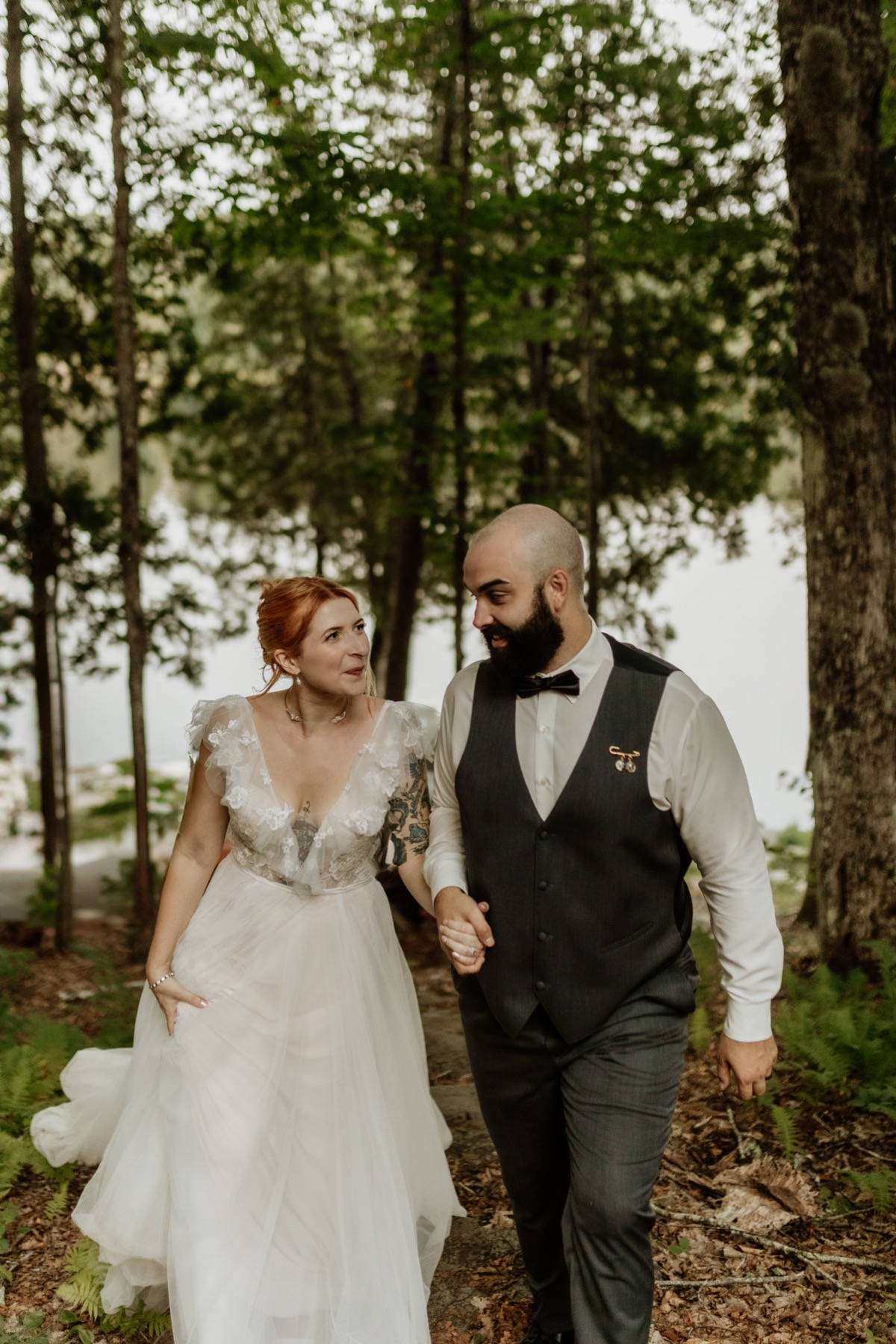
Each narrated film gives couples, families, and wedding parties a clear view of a different place to stay—without asking them to assemble the experience from scattered photos.
05 / Bunk House
Make group lodging feel familiar before arrival.
A warm, narrated walkthrough of the Bunk House shows wedding parties how the shared spaces, sleeping areas, and practical details come together.
06 / Golden House
Turn a stay option into part of the venue story.
A concise property film connects the Golden House to the wider Dragonwood setting so viewers can picture more than a room—they can picture the weekend.
07 / Main House
Show the home base for the full celebration.
The Main House film guides couples and families through the spaces that can support gathering, getting ready, and staying together across the wedding weekend.
04 The connected system
Digital property
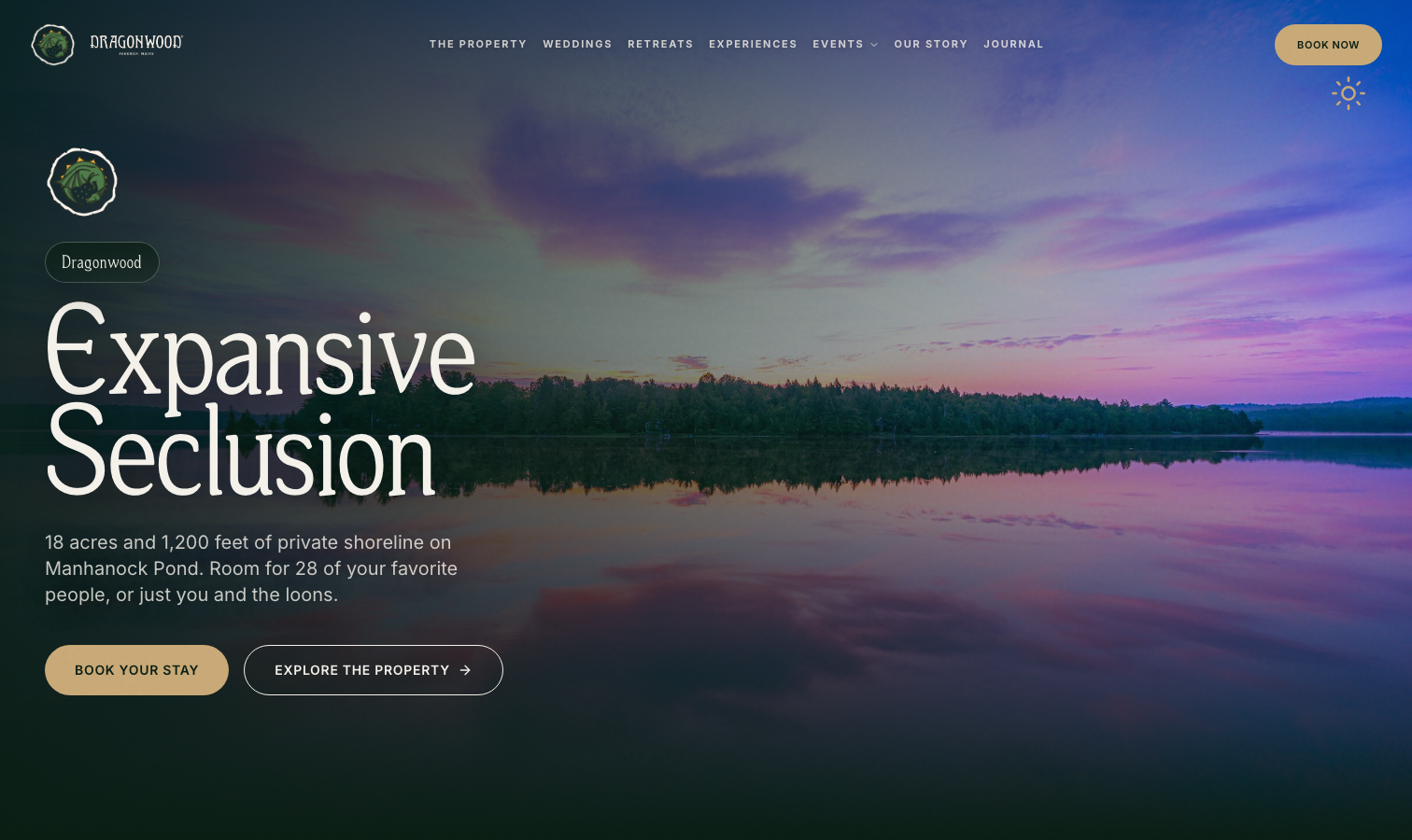
- Rebuilt the responsive website and migrated the domain from Wix to Vercel
- Created clear paths for weddings, retreats, families, lodging, and events
- Installed analytics, redirects, sitemap, structured metadata, and conversion tracking
Demand capture
- Built and optimized Google Search campaigns around high-intent audiences
- Connected ads to relevant landing experiences instead of a generic homepage
- Captured qualified inquiries in a live CRM for segmentation and follow-up
Content & social
- Developed people, place, property, and event content pillars
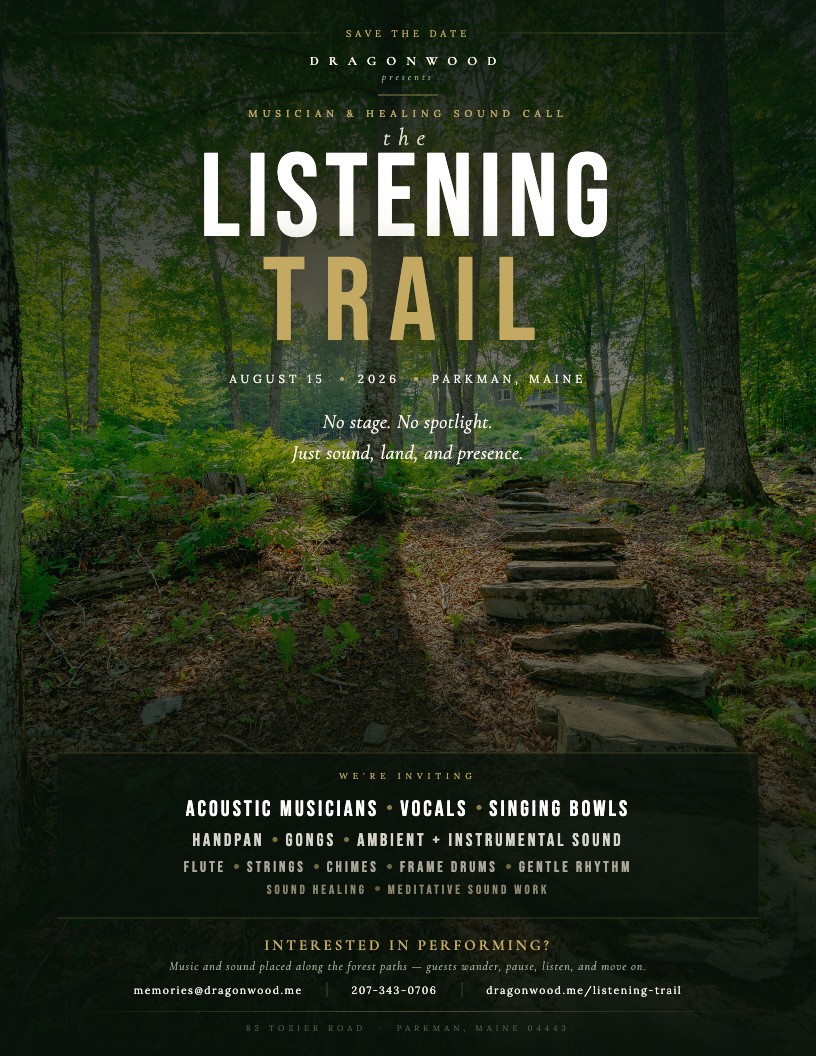
- Produced video, campaign creative, collateral, newsletters, and social assets
- Created an approval workflow so nothing published without client review
Client operations
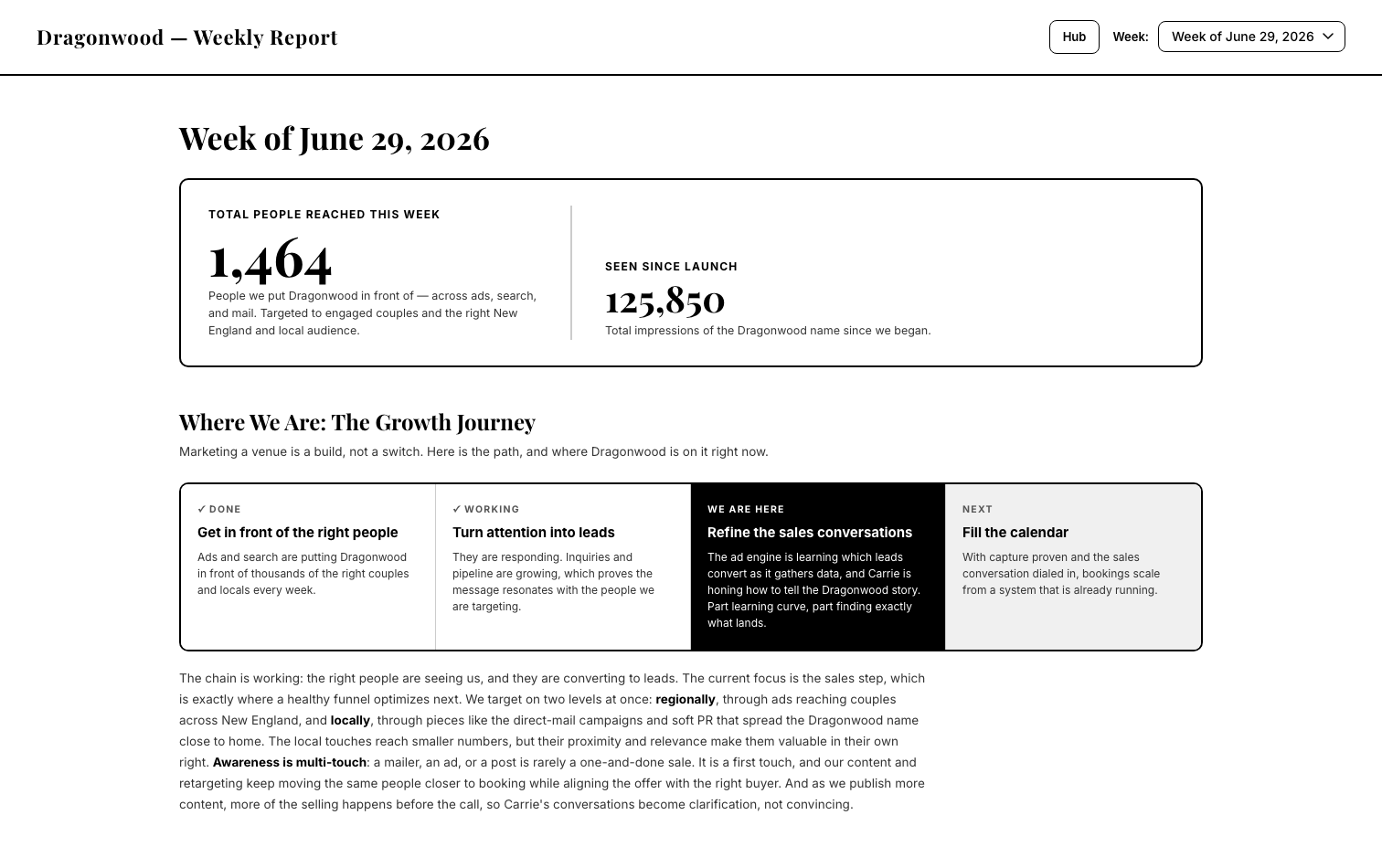
- Built a private command center for leads, analytics, events, and marketing review
- Connected forms, notifications, purchases, and reporting into one operating rhythm
- Left reusable infrastructure—not a collection of disconnected campaign files
05 Creative translated into business tools
From campaign attention to a place people can understand and act on.
The same visual system carried through the website, client reporting, event collateral, wedding promotion, and social content—giving Dragonwood a consistent face at every touchpoint.
The final product was not a website, an ad account, or a batch of content. It was one connected way for Dragonwood to be discovered, understood, trusted, and contacted.Muyinza Media Strategy, media, digital experience, and growth infrastructure.